机械师
Long lines at gas pump unlikely, but Middle East crisis could disrupt oil supplies_我的网站

一 | WASHINGTON -- Fifty years after the 1973 Arab oil embargo, the current crisis in the Middle East has the potential to disrupt global oil supplies and push prices higher. But don't expect a repeat of the catastrophic price hikes and long lines at the gasoline pump, experts say.The Israel-Hamas war is “definitely not good news” for oil markets already stretched by cutbacks in oil production from Saudi Arabia and Russia and expected stronger demand from China, the head of the International Energy Agency said.Markets will remain volatile, and the conflict could push oil prices higher, "which is definitely bad news for inflation,” Fatih Birol, executive director of the Paris-based IEA, told The Associated Press. Developing countries that import oil and other fuels would be the most affected by higher prices, he said.International benchmark Brent crude traded above $91 a barrel on Thursday, up from $85 per barrel on Oct. 6, the day before Hamas attacked Israel, killing hundreds of civilians. Israel immediately launched airstrikes on Gaza, destroying entire neighborhoods and killing hundreds of Palestinian civilians in the days that have followed.Fluctuations since the attack pushed oil prices as high as $96. The price of oil depends on how much of it is getting used and how much is available. The latter is under threat because of the Hamas-Israel war, even though the Gaza Strip is not home to major crude production.One worry is that the fighting could lead to complications with Iran, home of some of the world’s largest oil reserves. Its crude production has been constrained by international sanctions, but oil is still flowing to China and other countries.“In order to get a sustained move (in prices), we really would need to see a supply disruption,” said Andrew Lipow, president at Lipow Oil Associates, a Houston-based consultant.Any damage to Iranian oil infrastructure from a military strike by Israel could send prices jumping globally. Even without that, a shutdown of the Strait of Hormuz that lies south of Iran could also shake the oil market because so much of the world’s supplies goes through the waterway.Until something like that happens, “the oil market is going to be like everyone else, monitoring the events in the Middle East,” Lipow said.One reason 1970s-style gas lines are unlikely: U.S. oil production is at an all-time high. The U.S. Energy Information Administration, an arm of the Energy Department, reported that American oil production in the first week of October hit 13.2 million barrels per day, passing the previous record set in 2020 by 100,000 barrels. Weekly domestic oil production has doubled from the first week in October 2012 to now.“The energy crisis of 1973 taught us many things, but in my mind, the most critical is that American energy strength is a tremendous source of security, prosperity and freedom around the world,'' said Mike Sommers, president and CEO of the American Petroleum Institute, the U.S. oil industry's top lobbying group.In a speech Wednesday marking the 50th anniversary of the 1973 oil embargo, Sommers said current U.S. production contrasts sharply with “America’s weakened position during the Arab oil embargo.'' He urged U.S. policymakers to heed what he called the lessons of 1973.“We cannot squander our strategic advantage and retreat on energy leadership,'' said Sommers, who has repeatedly criticized President Joe Biden's policies restricting restricting new oil leases as part of Biden's efforts to slow global climate change.“With an unstable world, war in Europe, war in the Middle East, and energy demand outstripping supply, energy security is on the line,'' Sommers said in a speech at the Hudson Institute, a Washington think tank.“American oil and gas are needed now more than ever,'' Sommers said. “Let’s take to heart the lessons we learned from 1973 and avoid sowing the seeds of the next energy crisis.'' For now, the crisis isn’t a repeat of 1973. Arab countries aren’t attacking Israel in unison, and OPEC+ nations have not moved to restrict supplies or boost prices beyond a few extra dollars.There are several wild cards in the energy market. One is the supply of Iranian oil. Eager to avoid a spike in gasoline prices and inflation, the U.S. has quietly tolerated some exports of Iranian oil to destinations such as China instead of going all in on sanctions aimed at Iran’s nuclear program. If Iran, which has warned Israel not to undertake a ground offensive, escalates the Gaza conflict — including a possible attack by Hezbollah militants in Lebanon supported by Iran — that might change the U.S. stance. “If the U.S. were then also to enforce the oil sanctions against Iran more strictly again, the oil market would tighten noticeably,” say commodities analysts at Commerzbank.Lawmakers from both parties have urged Biden to block Iranian oil sales, seeking to dry up one of the regime’s key sources of funding.Another wild card is how Saudi Arabia would respond if Iranian oil is restricted. Oil analysts say that while the Saudis may welcome recent oil price hikes, they don’t want a massive price spike that would fuel inflation, higher central bank interest rates and possible recession in oil-consuming countries that ultimately would limit or even kill off demand for oil. A third unknown is whether more oil will reach the market from Venezuela. The U.S. agreed Wednesday to temporarily suspend some sanctions on the country’s oil, gas and gold sectors after Venezuela’s government and a faction of its opposition formally agreed to work together on election reforms.Venezuelan production could increase in 2024. In the next six months, however, production could ramp up by some 200,000 barrels a day, a relative drop in the ocean, according to Sofia Guidi Di Sante, senior oil market analyst at Rystad Energy.Wyoming Sen. John Barrasso, the top Republican on the Senate Energy and Natural Resources Committee, slammed the U.S. action as a “gimmick” that appeases a brutal regime in Venezuela. “Joe Biden’s energy policies put America last,'' Barrasso said, citing the Democratic president's decisions to kill the controversial Keystone XL oil pipeline and sell off significant portions of the nation’s Strategic Petroleum Reserve, taking it to its lowest level since the 1980s. The Energy Department said Thursday it will seek offers to start refilling the oil reserve in December, with monthly solicitations expected through May 2024.“He eased sanctions on Iran, which funds terrorism across the Middle East. Now with Israel under attack, Biden is desperate for anything to mask the consequences of his reckless policies,'' Barrasso said. “America should never beg for oil from socialist dictators or terrorists.''The Treasury Department says it has targeted nearly 1,000 individuals and entities connected to terrorism and terrorist financing by the Iranian regime and its proxies, including Hamas, Hezbollah and other groups in the region. "We will continue to take action as appropriate to counter Iran’s destabilizing activity in the region and around the world,” Treasury said in a statement.____McHugh reported from Frankfurt, Germany. Choe reported from New York.。
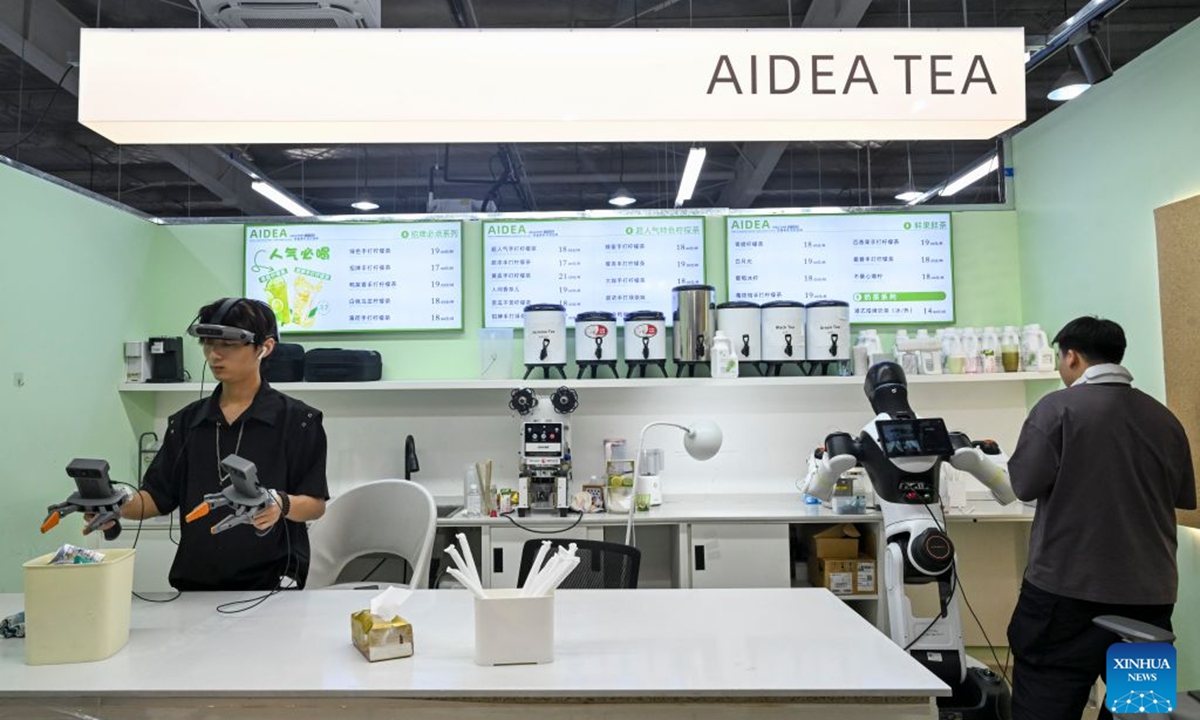
Staff members train a robot to work in a retail scenario at Maniformer, a physical AI data service platform, in Shanghai, east China, Aug. 5, 2026. In Shanghai's tech companies like AGIBOT and Maniformer, embodied intelligence robots are trained in household, retail, sorting, production and other real-world scenarios, to advance their AI capabilities for real-life use. (Xinhua/Chen Haoming)
Nation's value added in the service sector grew 5.2 percent year-on-year, 0.5 percentage points faster than overall economic growth. Retail sales of services rose 5.3 percent year-on-year. In the first half of the year, the service sector expanded steadily, playing an important role in supporting industrial upgrading and meeting people's livelihood needs.
A meeting of the Political Bureau of the Communist Party of China (CPC) Central Committee held on July 30 called for effectively expanding domestic demand and optimizing supply.
From April 7 to 8, a national conference on the service sector was held in Beijing — the first national gathering in the new era devoted to the service sector.
General Secretary Xi Jinping called for advancing producer services toward greater specialization and the higher end of the value chain, fostering high-quality, diverse and accessible consumer services, and building more "China Services" brands, as well as striving to break new ground in the high-quality development of China's service sector.
Beijing convened a municipal service sector conference and pledged to actively shape the "Beijing Services" brand.
Shanghai released its 15th Five-Year Plan (2026-30) for service sector development, aiming to comprehensively enhance the global reach and international competitiveness of "Shanghai Services."
Southwest China's Chongqing Municipality set out to build a modern service industry system and burnish "golden calling cards" of service development such as "Chongqing Trade Global."
Since the national conference, regions and departments have coordinated their planning and accelerated the building of service brands. By 2030, China's service sector is expected to top 100 trillion yuan ($14.6 trillion) in total scale, with higher quality, a better structure and improved standards.
With that target in sight, the Chinese economy is undergoing a fresh "system upgrade."
IBuilding more "China Services" brands is an inevitable choice that follows the laws of economic development and drives economic transformation and upgrading.
China's service sector has steadily expanded in scale and continuously improved in quality and efficiency since the 18th National Congress of the CPC, playing an important role in supporting industrial upgrading, meeting people's livelihood needs and driving job growth, according to Xi.
Scale is the most direct yardstick. In the first half of this year, the service sector accounted for 59.5 percent of GDP, making it the largest sector of the national economy, and contributed 66.1 percent to economic growth, emerging as the main engine of expansion. The figures reflect the sector's weight in high-quality development and in Chinese modernization as a whole.
The Chinese economy sits at a critical window as it shifts from factor-driven to innovation-driven growth, and from investment-led to consumption-led expansion. Projections show that during the 15th Five-Year Plan period, the service sector's contribution to GDP growth will rise steadily, making it the economy's main engine in every sense.
This is also where the key lies in answering people's expectations for a better life and in expanding domestic demand.
The changing Engel coefficient traces the leap in household consumption. At the start of reform and opening-up, the Engel coefficient for Chinese households exceeded 60 percent; in 2025 it stood at just 29.3 percent. The sharp drop in the share of spending on food has freed up vast room for consumption of services such as education, health, culture and tourism.
Global experience shows that once a country's per capita GDP passes $10,000, its consumption structure typically shifts markedly, with services taking a rapidly rising share. China is now in that critical transition. Consumption is moving from "subsistence consumption," geared mainly to basic needs, toward "development-oriented consumption" that seeks quality, experience and self-fulfilment.
From the breakout popularity of the Jiangsu Football City League and the Village Super League to the growing craze for "traveling to catch a show"; from the rapid spread of service points for the elderly and young children to 30-minute delivery of just about anything becoming the norm — service consumption is no longer an optional garnish but a necessity of a better life. With a middle-income group of more than 400 million, China is entering a golden period for expanding the capacity and quality of its service sector.
It is also a key step toward raising total factor productivity and developing new quality productive forces.
Take a garment company. In R&D, AI-assisted design can shorten development cycles. In production, intelligent transformation and digital upgrading can sharply lift efficiency. In distribution, modern logistics can cut overall costs. In sales, market analytics can match products precisely to customer segments.
Globally, as industries divide labor more deeply and integrate faster, leading manufacturers are broadly shifting toward service-oriented manufacturing, drawing on strengths in information, finance, R&D and design to dominate the construction of global value chains. Producer services play an increasingly prominent role in production networks, and largely determine whether product value can extend toward both ends of the "smile curve."
As the world's largest manufacturing nation, China still sees producer services account for less than 35 percent of GDP in value added, leaving gaps in scale, quality and efficiency compared with advanced international levels. Upgrading the service sector is key to moving from a manufacturer of quantity to one of quality.
IIIn building more "China Services" brands, tailoring measures to local conditions and applying targeted policies is the basic methodology.
Underscoring demand-driven development, reform breakthroughs, technology empowerment as well as opening-up and cooperation, Xi called for carrying out capacity-expanding and quality-upgrading initiatives in the service sector.
The service sector spans many categories and takes many forms; its subsectors differ in their levels of development and the challenges they face.
Start with producer services, these must serve enterprises across the full span of production and operations, with the aim of firmly supporting industrial transformation and upgrading by shoring up weak links along the entire chain.
Among these, the deep integration of advanced manufacturing and modern services — the so-called integration of the two sectors — is one of the core propositions of current industrial policy. For a long time, manufacturing and services have operated on parallel tracks, belonging to different policy systems, statistical classifications and regulatory frameworks.
Breaking down this divide requires embedding services into every pore of manufacturing, and the breakthrough lies in data and policy. On one hand, the industrial internet should serve as the link that connects data silos, drawing service firms to develop specialized, manufacturing-oriented services on a data foundation and forming an ecosystem of "data flow — embedded services — value creation." On the other, statistical and policy systems need reform: drawing on international experience, service units inside manufacturers should be able to keep separate accounts and enjoy service-sector policy benefits, giving the integration of the two sectors a clear policy foothold.
Turn to consumer services. At their core, these address people's needs across the full life cycle, with the aim of better meeting aspirations for a better life by raising the development level of key consumer service areas.
Take elderly care and childcare. Demand is moving up from basic provision toward inclusive and even mid- to high-end services, and it is broadening: expectations now span facilities, services, and material and emotional needs alike. Supply-side structural strains are equally acute. In some big cities, beds at high-quality elderly care institutions are nearly impossible to secure, while many beds sit empty at township homes for the elderly. Places at standardized chain childcare centers are hard to come by, even as some small childcare providers struggle to stay in business.
Faced with strains that are multilayered and varied, only precise disaggregation and tiered policies can deliver genuine quality upgrades.
At the baseline, the government should take the lead in improving the three-tier elderly care network across counties, townships and villages, reinforcing the social safety net. At the middle tier, the government should guide the way — using investment, tax and fee incentives, resource guarantees and institutional reform to mobilize more social forces, so that more families can access elderly care and childcare that is affordable, reliable in quality and safe. At the upper tier, industrial policy and a better business environment should support market players in providing personalized and customized services.
IIIBuilding more "China Services" brands means seizing the initiative through the newness of innovation and winning reputation through the substance of quality.
Building more "China Services" brands requires deepening institutional opening-up.
Brands are forged only in open competition. However, barriers in goods trade sit mainly "at the border" — tariffs and customs clearance — while barriers in services trade are more often hidden "behind the border," in market access rules, regulatory systems, qualification recognition and the mutual recognition of professional credentials.
China needs to keep refining the negative list for the service sector and further trim its scope, so that it becomes a genuinely predictable and workable opening-up commitment. It also needs to improve regulatory transparency and consistency, align regulatory rules with prevailing international practice, and reduce hidden barriers. At the same time, cross-border mutual recognition of professional credentials for engineers, physicians and others should be actively advanced, allowing high-end service talent to move freely.
Building more "China Services" brands also means that, as the saying goes, it takes a good blacksmith to forge good iron.
A recent piece of news drew global attention: Mixue Ice Cream & Tea has grown to nearly 60,000 stores worldwide, becoming a food and beverage chain of broad global influence.
Behind Mixue's success lies an intelligent supply chain system. At the front end, it converts consumption data into planting data, guiding farmers to produce to order. In the middle, an intelligent scheduling system coordinates nearly 30 warehouses nationwide, with cold chain coverage reaching more than 97 percent of stores. At the tail end, algorithms provide precise support for choosing store locations. Foreign media have remarked that the chain store's mascot "Snow King" will turn up in your city sooner or later.
Differentiated competition among service brands, in the end, comes down to a contest of innovation capability. For "China Services" brands to truly stand firm, make a name and travel far, they must seize the initiative through the newness of innovation, pushing continuous breakthroughs in service models, technologies and consumption scenarios, and win reputation through the substance of quality.
From selling products to selling services, from "Made in China" to "China Services" — as a 100-trillion-yuan service landscape slowly unfolds, there is reason to believe that these gleaming "China Services" calling cards will converge into powerful momentum for the high-quality development of the Chinese economy.
This was compiled from an article originally published on the front page of the People's Daily on August 13, 2026. 。
Current article:http://6sz2lpc.gamajionghuanmuniuzhuanguchu.cyou/xkbhsrz/5h7.html
Published on:22:14:19
